How to Make a Sosocamo Type Beat That Holds a Night Shift Mood
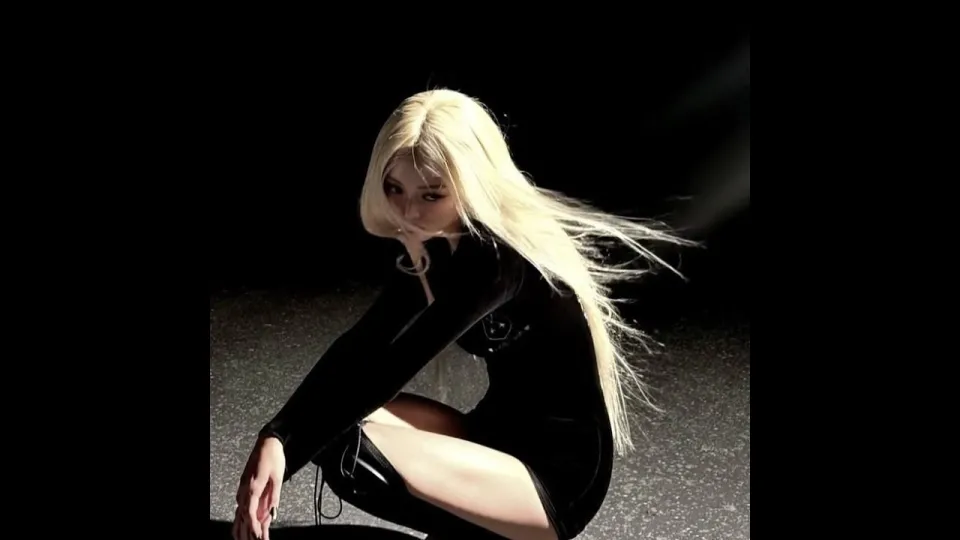
· based on the channel oluwi
Key takeaways
- "Night Shift" by oluwi is a Sosocamo / Don Toliver type beat at 76 BPM in F major.
- The arrangement runs four sections (B, C, B, C, B, C, B, D) across roughly four minutes.
- The license page for the beat is https://bsta.rs/OLJOdi, with a buy-2-get-1-free deal.
- oluwi also offers 20 free Analog Lab presets and paid sample packs for producers.
- Sosocamo type beats sit between melodic trap, ambient haze and Don Toliver-style vocal space.
A Sosocamo type beat is a melodic trap instrumental built around soft, wide chords, sparse drums and a lot of empty space for a half-sung vocal — and the fastest way to learn the format is to copy the frame of a reference like oluwi's "Night Shift," a 76 BPM beat in F major that doubles as a Don Toliver type beat. You can license the "Night Shift" beat here and study its structure bar by bar, or rebuild the same template from scratch with the steps below. The genre rewards restraint more than density: few elements, long tails, and a vocalist who never has to fight the mix.
What defines the Sosocamo type beat sound
Sosocamo type beats are melodic trap instrumentals where atmosphere carries the track and the drums stay deliberately thin. The style overlaps heavily with the Don Toliver and Yeat type beat tags, because all three lean on the same ingredients: detuned or heavily reverbed keys, a simple bass line that follows the chord roots, and 808 patterns that leave gaps instead of filling every eighth note. Producers searching for a "melodic Sosocamo type beat" or a "dark Sosocamo type beat" are usually after the same core: a loop that sounds expensive on its own, before any drums are added.
Practical markers of the sound:
- Tempo in the 70–80 BPM range — "Night Shift" sits at 76 BPM, slow enough for triplet flows but not a ballad.
- A minor-leaning or moody major key; "Night Shift" uses F major, which gives brightness to the chords while the melody stays melancholic.
- Chord loops of two to four bars, usually played on electric piano, analog-style pads or a filtered guitar sample.
- Drums that enter late or drop out often — the first 25 seconds of "Night Shift" are labeled as the B section, meaning the beat opens on a full loop rather than a bare intro.
- Vocal-ready midrange: nothing harsh between roughly 1 and 4 kHz, so a rapper or singer can sit on top without EQ surgery.
How to build the beat step by step
Start with the loop, then the bass, then the drums, and only then polish the mix — this order keeps a Sosocamo type beat from turning into a crowded trap track. The steps below mirror how a four-minute arrangement like "Night Shift" is typically assembled, with sections that alternate rather than build in one straight line.
- Set the session. 76 BPM, F major, 4/4. Leave the master bus empty and put a limiter only at the very end.
- Write a two- or four-bar chord loop. Use a Rhodes or electric piano patch with heavy chorus and a long reverb tail. Keep voicings open — root, fifth, ninth — and avoid stacking thirds in the low register.
- Add a counter-melody. A single high pluck or bell line, played sparsely, gives the loop a hook without competing with a vocal. Automate a low-pass filter so the melody opens up every eight bars.
- Program the 808. Follow the chord roots, slide between notes, and leave at least one beat of silence per bar. In F major, the sub should sit around F1–F2 and never overlap the kick for long.
- Layer the drums. A short, dry kick, crisp closed hats with occasional triplets, and a snare or clap with a wide room reverb. Keep the hat pattern simple; the atmosphere, not the percussion, should be the busy part.
- Arrange in alternating blocks. "Night Shift" is labeled B, C, B, C, B, C, B, D across its runtime — essentially a loop section (B), a variation section (C), and a final section (D) that closes the beat. Copy that logic: introduce a new element in C (a filtered pad, an extra vocal chop), then return to B so the listener re-learns the hook.
- Mix for the voice. Cut the loop around 300 Hz to clear mud, keep the 808 mono below 120 Hz, and leave the center channel relatively free above 2 kHz.
Tempo, key and arrangement numbers to copy
The concrete numbers behind "Night Shift" are the most useful part of the reference, because they remove guesswork from the first ten minutes of a session. The beat runs at 76 BPM in F major, which places it in the slow-melodic zone where Don Toliver-style records and Yeat-style records overlap. At that tempo a bar lasts about 3.16 seconds, so a four-bar loop is roughly 12.6 seconds — long enough to establish a mood, short enough that a 16-bar verse needs only four repetitions.
The section map published with the beat is equally instructive: B at the start, then C, then B, C, B, C, and a closing D section. That is three full cycles of the main loop with a variation between each, and a distinct outro. For a four-minute instrumental, that means the producer resisted adding a brand-new part every 16 bars — a common mistake in ambient Sosocamo type beats, where too many switches dilute the atmosphere. If you want a free Sosocamo type beat to practice arrangement on, build your own B and C sections first and only then decide whether a D is needed.
Sound design and sample choices
Sound selection decides whether a Sosocamo type beat reads as premium or generic, and the safest route is a small palette used consistently. Analog-style synth presets, tape-saturated keys and one well-chosen vocal chop will do more than twenty layers. oluwi publishes a set of 20 free Analog Lab presets at https://wav.id/oluwi, which is a practical starting point for the pad and keys sounds this style depends on, and paid sample packs at https://wavs.com/oluwibeats for producers who want ready-made loops and one-shots.
Guidelines that keep the palette coherent:
- Pick one chord source and one melodic source. Everything else should be percussion or texture.
- Use reverb on a send, not on individual channels, so the whole beat shares one space.
- Record or resample the loop through tape or a bit-crusher at low mix levels to glue the layers.
- If you use a sample, pitch it to F major and check that the formants do not clash with a vocalist's range.
- Keep the stereo field wide on pads and narrow on bass and kick; mono-compatibility still matters for phone speakers.
Mixing and vocal-ready space
A Sosocamo type beat succeeds or fails on how much room it leaves, so mixing is mostly subtraction. Start by high-passing pads around 100–150 Hz so the 808 owns the low end, then carve a shallow dip near 300–400 Hz in the keys to prevent mud. The 808 should be mono, saturated lightly for audibility on small speakers, and sidechained gently to the kick so the two never mask each other.
On the top end, keep hats and plucks bright but tamed with a dynamic EQ or a de-esser if they get piercing. Leave the 1–4 kHz region relatively open — that is where a rapper's intelligibility lives, and a Don Toliver-style singer needs even more space there. Finally, check the beat at low volume: if the chord loop and the 808 still read clearly, the balance is right, and a vocal will slot in without further work.
Useful links
- License "Night Shift" and other beats: https://bsta.rs/OLJOdi
- Free 20 Analog Lab presets from oluwi: https://wav.id/oluwibeats — see the producer's own link at https://wav.id/oluwi
- Sample packs: https://wavs.com/oluwibeats
Final thoughts on building this sound
A Sosocamo type beat is a discipline in leaving things out: one strong loop, a bass line that follows it, drums with holes in them, and a mix that protects the vocal range. "Night Shift" by oluwi shows the formula in plain numbers — 76 BPM, F major, alternating B and C sections, a closing D — and that structure is repeatable in an afternoon once you stop adding layers. Build your own version, compare it against the reference, and cut anything that does not serve the mood. When you are ready to skip the production stage, license the "Night Shift" beat and get to writing; the buy-2-get-1-free deal applies to the catalog. The breakdown above comes from the oluwi channel, which publishes type beats and producer resources under the same name.
Source: SOSOCAMO TYPE BEAT "NIGHT SHIFT" / DON TOLIVER TYPE BEAT · Markdown version
Questions & answers
What is a Sosocamo type beat?
It is a melodic trap instrumental built in the style associated with Sosocamo, closely related to Don Toliver and Yeat type beats. The defining traits are slow tempos around 70–80 BPM, wide reverb-heavy chords and sparse drums that leave room for a half-sung vocal.
What tempo and key is "Night Shift" by oluwi?
The beat runs at 76 BPM in F major. At that tempo a four-bar loop lasts roughly 12.6 seconds, which suits slow triplet flows and melodic hooks without dragging.
Can I use the "Night Shift" beat for a released track?
Yes, through the license page at https://bsta.rs/OLJOdi, where the beat can be purchased for artist use. The producer also runs a buy-2-get-1-free deal on the catalog, and questions can go to the contact listed on the channel.
What plugins or samples help make this style?
Analog-style synth and electric piano presets are the core, and oluwi offers 20 free Analog Lab presets at https://wav.id/oluwi plus sample packs at https://wavs.com/oluwibeats. Keep the palette small — one chord source, one melodic source, and percussion — so the atmosphere stays coherent.